
Treatment Information
Treatment Information
Principles of EvoNK Immune Cell Therapy
Immunotherapy, the 4th generation cancer treatment following surgery, radiation, and chemotherapy, is gaining significant attention.
NK cells are crucial immune cells responsible for innate immunity, playing a role in directly destroying cancer cells and virus-infected cells.
1. Cancer Cell Recognition
NK cells recognize cancer cells by detecting specific signals (MICA, MICB, etc.) that appear on cancer cell surfaces. They also identify cancer cells by detecting the decrease of MHC Class I molecules that normal cells possess.
2. Cytotoxic Action
When NK cells recognize cancer cells, they secrete cytotoxic substances such as Perforin and Granzyme to destroy cancer cells. Perforin creates holes in the cancer cell membrane to allow Granzyme to enter the cell, and Granzyme induces apoptosis (cell death) of cancer cells.
3. Cytokine Secretion
NK cells secrete cytokines such as IFN-γ and TNF-α to activate other immune cells and enhance the immune response against cancer cells.
Advantages of EvoNK Immune Cell Therapy
1. Minimal Side Effects
NK cells have fewer side effects because they utilize the patient's own cells. While conventional cancer treatments are accompanied by side effects such as nausea, hair loss, and weakened immunity, NK cell therapy has almost none of these side effects.
2. Prevention of Metastasis and Recurrence
NK cells not only directly destroy cancer cells but also activate the entire immune system, helping to prevent cancer metastasis and recurrence.
3. Targeted Treatment Potential
Recent research is developing technologies such as CAR-NK cell therapy that enhance the targeting ability of NK cells to selectively attack specific cancer cells.
4. Applicable to Various Cancer Types
NK cells recognize and eliminate abnormal cells without depending on specific cancer antigens, making them applicable to treatment of various types of cancer.
5. Compatible with Existing Treatments
NK cell therapy can be combined with surgery, radiation therapy, and chemotherapy to enhance treatment effectiveness.
EvoNK Immune Cell Therapy Effects
You can visually confirm the results through weekly NK cell activity tests. Recovery to normal range was achieved in just 4 weeks, and by week 6, values exceeded 1,000.
NK cell activation therapy activates NK cells, the core of immunity, delivering powerful immune enhancement effects.
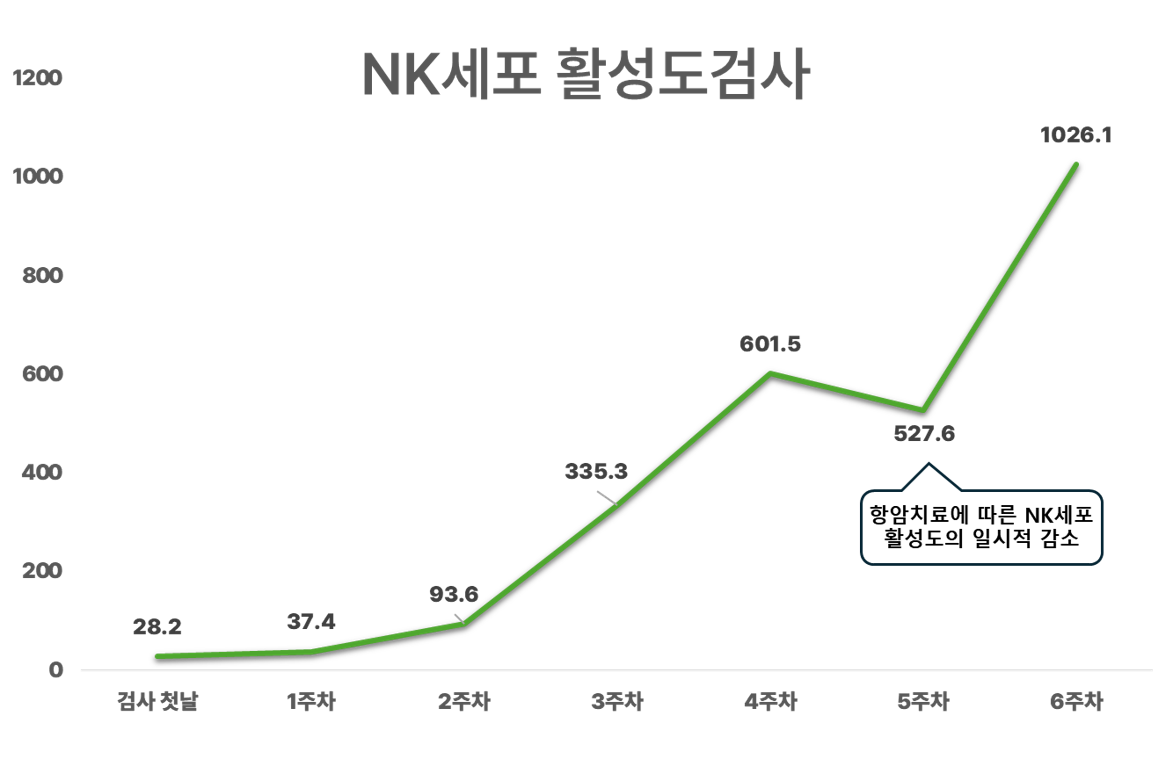
Normal Range
≥ 500.0 pg/ml
Attention Range
250 ~ 499.9 pg/ml
Borderline Range
100 ~ 249.9 pg/ml
Abnormal Range
< 100 pg/ml
EvoNK Treatment Candidates
EvoNK is a groundbreaking technology that goes beyond simply increasing NK cell count.
It creates the most powerful and effective NK cells to stand at the forefront of the fight against cancer.
1. Residual Cancer Removal and Recurrence Prevention After Treatment
EvoNK effectively reduces the risk of recurrence after surgery, chemotherapy, or radiation therapy by targeting and eliminating microscopic cancer remnants.
2. Patients Not Responding to Standard Treatment
EvoNK provides a new treatment pathway for patients who have reached the limits of conventional treatment.
3. Patients Seeking Quality of Life Improvement
Activated EvoNK cells can alleviate symptoms, reduce inflammation, and improve overall well-being.
4. Those Considering Cancer Prevention
Enhanced immune function can reduce the risk of cancer development in high-risk groups.
What are Stem Cells?
Stem cells are primitive cells that can transform into any cell or tissue in our body.
They are 'cells of potential' without predetermined functions, possessing two key characteristics: self-replication ability and differentiation ability.
Self-Replication Ability
Stem cells can create identical copies of themselves, just like copying an original.
Differentiation Ability
Under appropriate conditions, stem cells can differentiate into various types of specific cells. Hematopoietic stem cells in bone marrow can differentiate into blood cells, while mesenchymal stem cells can differentiate into bone, cartilage, fat, and fibrous tissue.

▶ Blood-Derived Stem Cells
Previously, obtaining stem cells required removing skin tissue for cultivation or aspirating cells by inserting needles into bone marrow—a physically demanding method. However, through superior stem cells originating from the cardiac endocardium (CiMS), stem cells can now be cultured and extracted from just 10-20cc of blood.
▶ Cord Blood-Derived Stem Cells (Cartistem)
Cord blood is extracted from umbilical cord tissue collected at birth. Cord blood contains abundant hematopoietic stem cells that create blood and mesenchymal stem cells that differentiate into tissues.
▶ Bone Marrow-Derived Stem Cells
This method uses stem cells directly harvested from bone marrow. Also known as autologous bone marrow aspirate concentrate injection therapy, it has been commonly used in conventional stem cell treatments.
▶ Adipose-Derived Stem Cells
This method extracts stem cells from fat harvested from the abdomen or thighs. A centrifuge is used to obtain the stromal vascular fraction (SVF) rich in mesenchymal stem cells from the harvested fat.
Blood Stem Cell Treatment Principles
The core of blood stem cell therapy is CiMS (Circulating Multipotent Stem Cells).
CiMS exists attached to the cardiac endocardium and circulates throughout the body via blood when detached.
1. Anti-Inflammatory Effect
Cytokines secreted by stem cells regulate inflammatory responses, preventing disease-induced inflammation from worsening.
2. Cell Recruitment
Stem cells recruit cells necessary for tissue growth, such as endothelial progenitor cells, to damaged areas to promote recovery.
3. Growth Factor Secretion
Stem cells secrete growth factors that promote new blood vessel growth and help collagen production.
4. Apoptosis Inhibition
They protect damaged cells from further death.
5. Tissue Regeneration Through Direct Differentiation
When necessary, stem cells themselves differentiate into tissues such as bone, cartilage, tendons, and ligaments to directly fill damaged areas.
EvoSTEM Stem Cell Applications and Effects
EvoSTEM stem cell therapy is an advanced treatment that regenerates damaged joint cartilage and tissue using autologous stem cells.
Chronic Inflammation & Immune Diseases
Arthritis, Rheumatism, Atopy, Asthma
Anti-Aging & Skin Improvement
Wrinkle Reduction, Elasticity, Skin Conditions
Cardiovascular & Vascular Health
Hypertension, Arteriosclerosis, Diabetic Complications
Brain Health & Neurological Diseases
Dementia, Parkinson's, Stroke Aftereffects
Muscle & Joint Diseases
Degenerative Arthritis, Muscle Damage
Fatigue Recovery & Vitality Enhancement
Chronic Fatigue, Sleep Disorders
Stem cells are key elements in cell regeneration and tissue repair, moving to damaged areas to promote cell recovery.
Treatment Cases
Skin Sagging and Wrinkle Concerns
(42-year-old Female)
35% increase in skin elasticity
Reduced fine lines, improved skin tone
Muscle Weakness and Memory Decline
(63-year-old Female)
Increased muscle mass
Improved cognitive function
Stage 3 Knee Osteoarthritis
(71-year-old Female)
After 6 months of treatment
35% increase in cartilage thickness
EvoSTEM Stem Cell Advantages
1. Treatment Complete in Just 3 Hours
Unlike conventional stem cell treatments requiring 2-3 weeks of cultivation, treatment is completed in just 3 hours.
2. Exclusive Cell Activator
High-quality cells are extracted from the patient's blood and infused with our exclusive cell activator.
3x Faster Recovery / 5x Longer Lasting
3. Blood-Based Treatment
Stem cells are extracted directly from the patient's own blood instead of fat or bone marrow.
Safe and Personalized Treatment